
The Wolverine: aka Lanesplitter Step Up
6'6" | Stock Dims | Blue Density US Blank | 6+4/4 S-Cloth Custom Spray
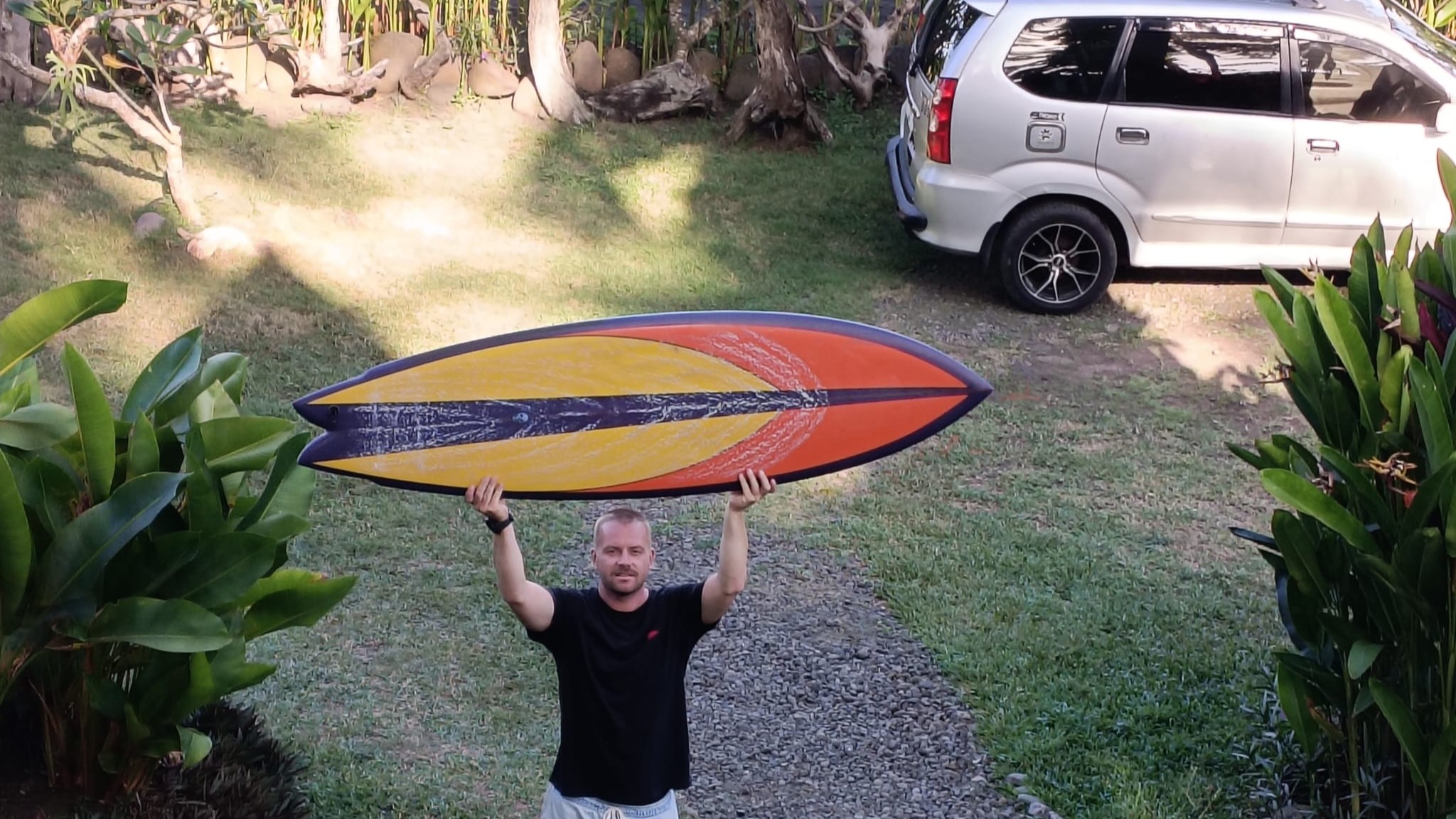
The custom family project: Stock dims with a kids-designed spray.
The Setup & Board Progression
So why did I get one? Well, funny story. The destroyer of surfboard rails (aka my lovely wife) gave me a surfboard for Valentine's Day when we were doing a gap year in Bali. This threw me off, since at the time I was frothing on a 5’11 Lanesplitter and a 6’8 JS Big Baron. But it got me thinking about what was missing in my quiver. I ended up chatting with the guys at the Onboard store, and eventually, my thoughts landed on the Wolverine as a semi step-up and midlength.
I watched the very few reviews available for the Wolverine on YouTube and checked out the comments on Reddit's /r/surfing. At first, I thought the feedback was mixed, but after taking a closer look, I realized it was just one guy who had a bad experience and had commented on quite a few different threads! After some additional thought, I asked the subreddit what they would recommend based on my quiver. Someone recommended getting an Osprey instead as a real step-up, but I decided to go with the Wolverine based on my love for the Lanesplitter. My thinking was that I won’t be needing an actual step-up anyway, since I’m not at that skill level yet.
I got a 6'6" in stock dims, with a confirmed blue density US Blank as the base, and added 6+4/4 S-cloth to maximize durability. The S-cloth only cost an additional 200k rupiah (about 10 euros at the time), so it was a no-brainer to include. I also got my kids to help design a spray for the board so it would look awesome.
For fins, I decided to just go with the Christenson uprights I was already using in the Lanesplitter and add the Christenson keel fins to my arsenal so I could try them alongside eachother. I checked out some other step-up style twins on the market, like Jim Banks, and most of them seem to use keels as well. Spoiler: The uprights are the best choice, I later bought a set of second hand Album uprights so I don't need to swap the CC upright fins around.
The Shape
This board shares the same bottom contour as the Lane Splitter, featuring an equally pulled-in tail and a heavy Vee out the back—a design element I’ll dive into later when discussing fin choices.
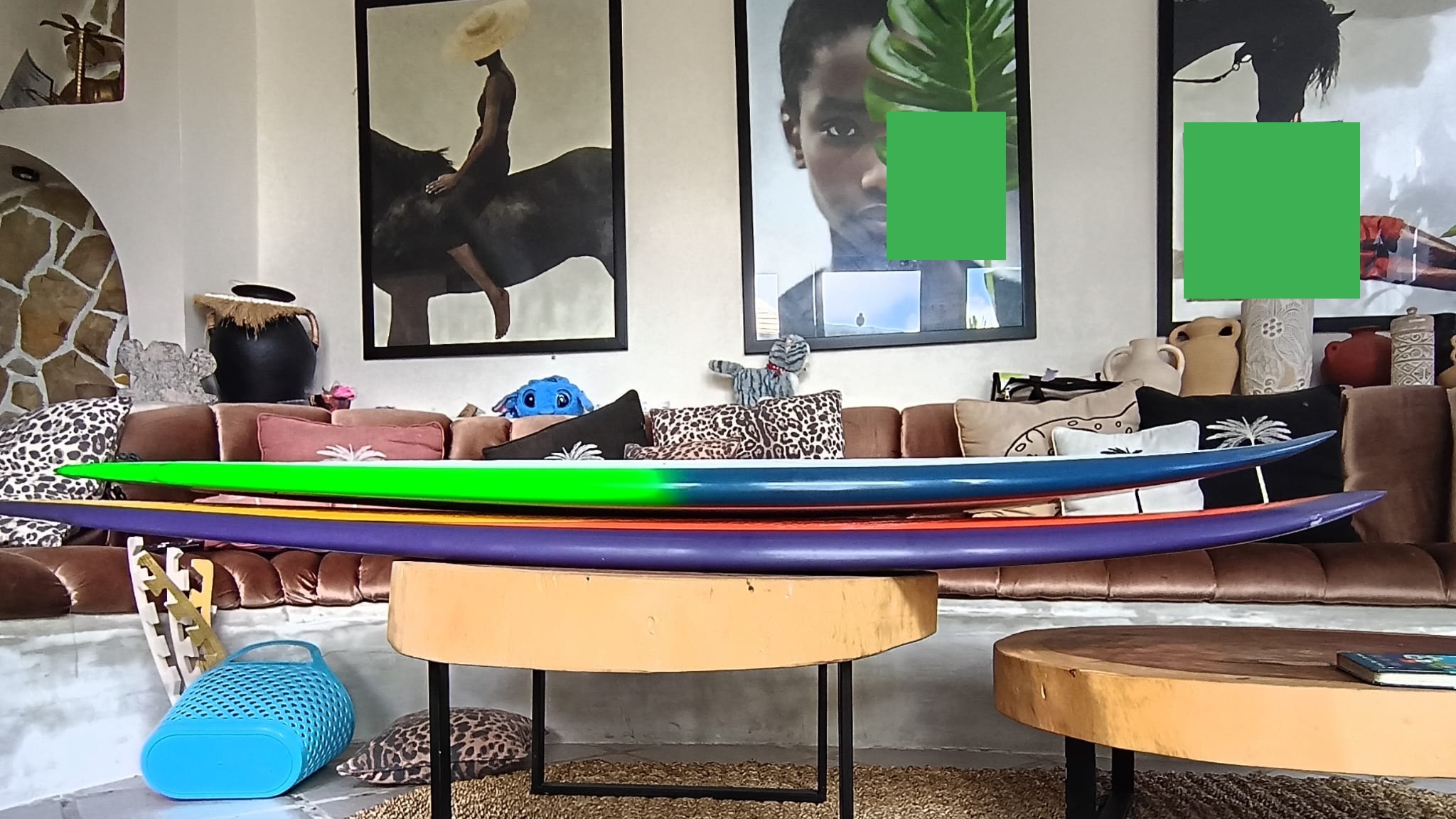
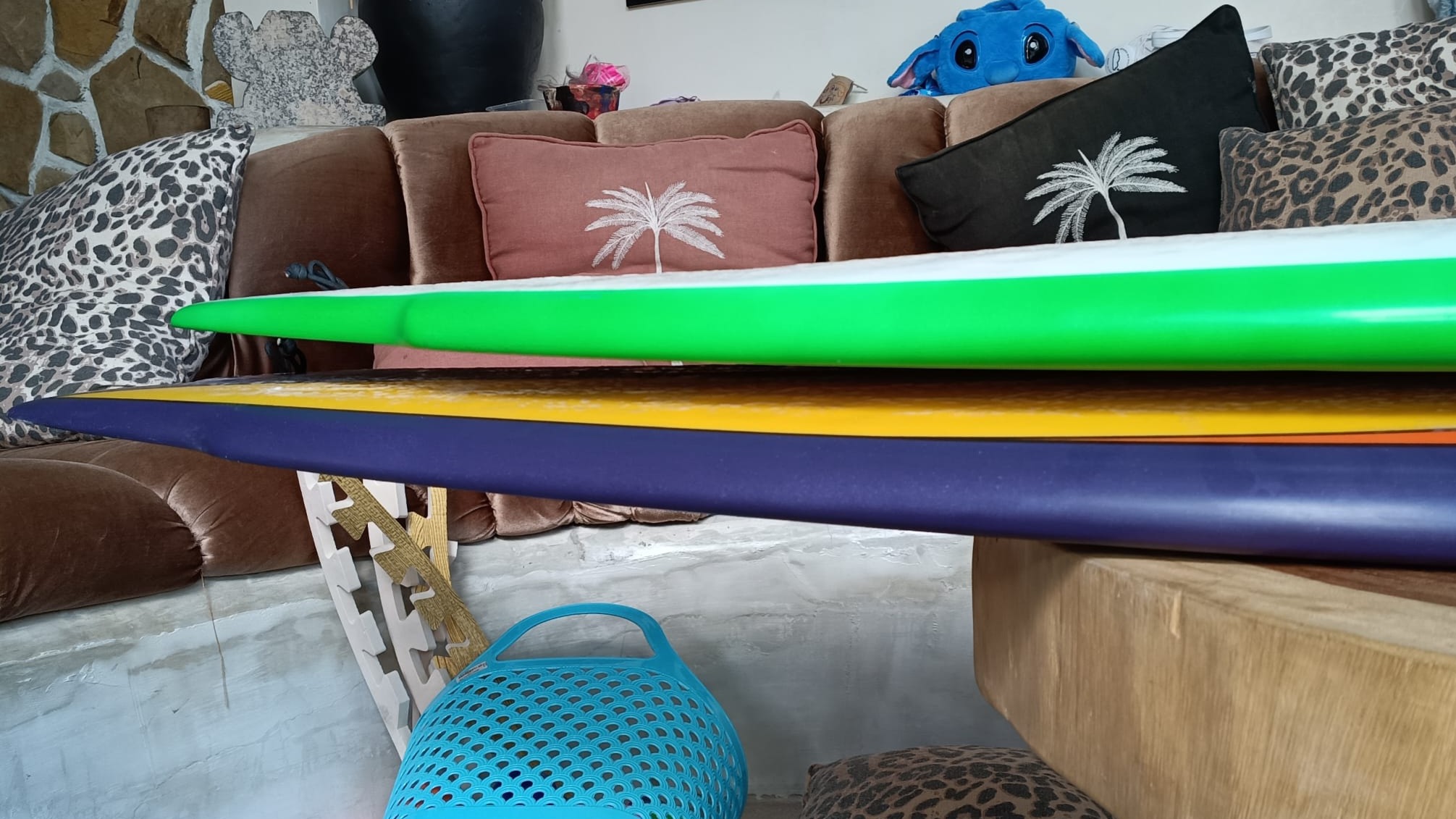
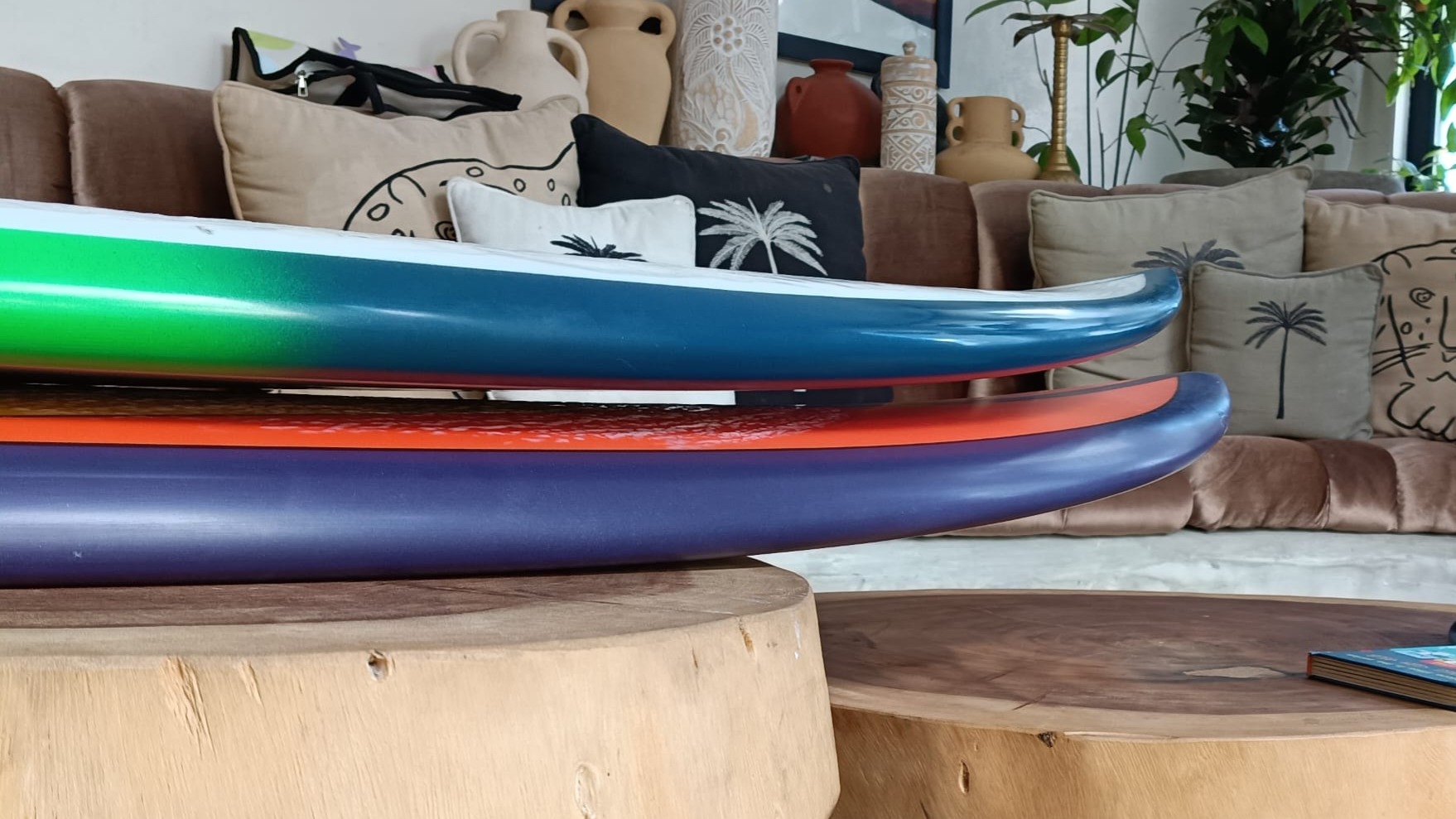
Visually, however, the fins on the Wolverine look a lot more swept back. On both shapes, the fin boxes sit in the exact same position relative to the wings, and the physical distance from the fin boxes to the very tip of the tail block only differs by about 2 cm. The real contrast is where the Vee bottom begins.
On the Lane Splitter, the distance from the back of the fins to the start of that bottom Vee section is 25 cm, whereas on the Wolverine, it’s only 19 cm. In short, the Vee contour extends much further up the board on the Lane Splitter.
This structural difference changes how you ride them. The Lane Splitter's layout allows you to step directly over—or even behind—the fins for some extra turning magic (a pro-level move I haven’t quite unlocked yet). The Wolverine, by contrast, relies on that tighter Vee cluster to perform strictly as a smooth-flowing mid-length and semi-step-up.
There are almost no real consumer reviews online for this board. Aside from a few brief mentions, Trip Forman from REAL Watersports did the only extensive video review, alongside a video of Chris Christenson himself giving a detailed breakdown of the shape and its intended design purpose.
Keel vs Upright
I have surfed the Wolverine about 15 times now across various spots and wave heights. In the beginning, I really struggled to catch waves—especially the smaller ones. I had expected this board to feel like a mid-length version of the Lane Splitter, but that is definitely not the case.
Frustrated, I ended up having a conversation with a few LLMs. They raised some interesting design points that I hadn't considered, and that I couldn't find in any online reviews. Chris Christenson did his shaping apprenticeship under the legendary Skip Frye, which provided the ultimate clue as to why the board sometimes felt like paddling with the handbrake on.
Unlike the Lane Splitter, this board needs a bit more runway to get moving. It also really, really likes it if you angle the board on the takeoff, allowing the rail to engage and catch the glide of the wave face. That long-rail glide is a characteristic that can be traced directly back to Skip Frye's designs.
In short: sit a little deeper to give yourself room to build momentum, and noticeably angle the board as you enter the wave to get that rail gliding. Implementing this was a total game-changer. That extra runway combined with the angled takeoff means I'm now catching almost every wave I paddle for.
Since sorting out the entry, I’ve taken the Wolverine out in maxed-out conditions at Kedungu and on heavy slabs in Sumba. Boy, this is a solid board to have when the surf steps up. It feels incredibly stable on the drop and accelerates like a rocket. Once you get the hang of utilizing those long rails, you can generate an amazing amount of flow down the line, both frontside and backside.
This brings me back to the fin choice: Keels vs. Uprights. Initially, I messed around with both setups. My takeaway is that while keels surf beautifully once you are up and moving, they create noticeable drag while paddling at times, it almost felt like pulling an anchor.
Because of that, it’s uprights all the way for me now. As mentioned I scored a pair of Album upright twins off Facebook Marketplace, so I no longer have to swap my CC uprights back and forth every time I switch between the Lane Splitter and the Wolverine.
My Experience & Surfing
I have personally used this board as a step-up and a travel board. Seems like a solid 2 board quiver with the Lanesplitter. I plan to try it as a mid-length back home in the crappy Dutch surf. My thinking is that my JS Big Baron will simply be too much mid-length to work well in the short, incoherent waves in the Netherlands, whereas the Wolverine will fit that gap perfectly. It will still turn and twist right where you want it to in Dutch waves while retaining some of that mid-length glide when you need it. The only real problem might be whether the extra runway the Wolverine needs can handle those tight, six-second windswell periods... but I will let you know once I’ve tried it! So far, this board has not disappointed and is doing exactly what I wanted it to do.
Having surfed it a few times now, I am still getting used to the longer rail turns it makes. It responds quickly, but you have to hold your turns longer than I originally expected. For some reason, it doesn't really surf like a typical mid-length; I don't feel the need to move up and down the board to turn and generate speed nearly as much as I did with the JS Big Baron. Instead, this board works beautifully when you simply shift your weight. It also feels like it has a much bigger sweet spot for your feet compared to the Lanesplitter, yet it still responds in a similar manner.
This realization—that I don't move around as much as I do on the Big Baron—is an important observation. It could actually be the answer to why I noticed such a minimal difference between the upright and keel fins. If I were to step further back, would I be able to snap off shorter turns? I’d be surprised, but it’s definitely something I want to test in my upcoming sessions.
I think the key difference compared to the Big Baron is that when you step back on the Baron, it almost turns like a shortboard (well, not quite, but much more so than a typical mid-length). The Wolverine, on the other hand, is designed to be surfed on the full extension of the rail. It’s a completely different design philosophy.
Resell Value
By ordering the heavy blue-density core blank alongside premium S-cloth glassing, structural integrity is exceptionally defended against standard deck welling. Like the Phantom, anchoring this specific reinforcement profile protects resale valuation on the second-hand market back in the Netherlands.
Fin Setup & Blocks
A dedicated twin setup layout. Using Christenson uprights yields snappy pivot response, whereas running the wider base Christenson keels generates locked-in, down-the-line tracking through shifting sizing sections.
The Verdict
The board has not disappointed and is doing exactly what I wanted it to do. It fits the gap perfectly for when you want clean glide but still require the agility to turn precisely within tight pockets.
The next addition to this review will be after I have used it a couple of times back in the Netherlands. Updates coming after July 2026.
Where to Buy
We recommend checking stock across our trusted partners. Availability varies by region.